
Ecommerce Marketing·Oct 5, 2026
Learn how to make a customer testimonial video with interview prompts, filming tips, editing structure, disclosure checks, and creative variations.
By Sprokl Team
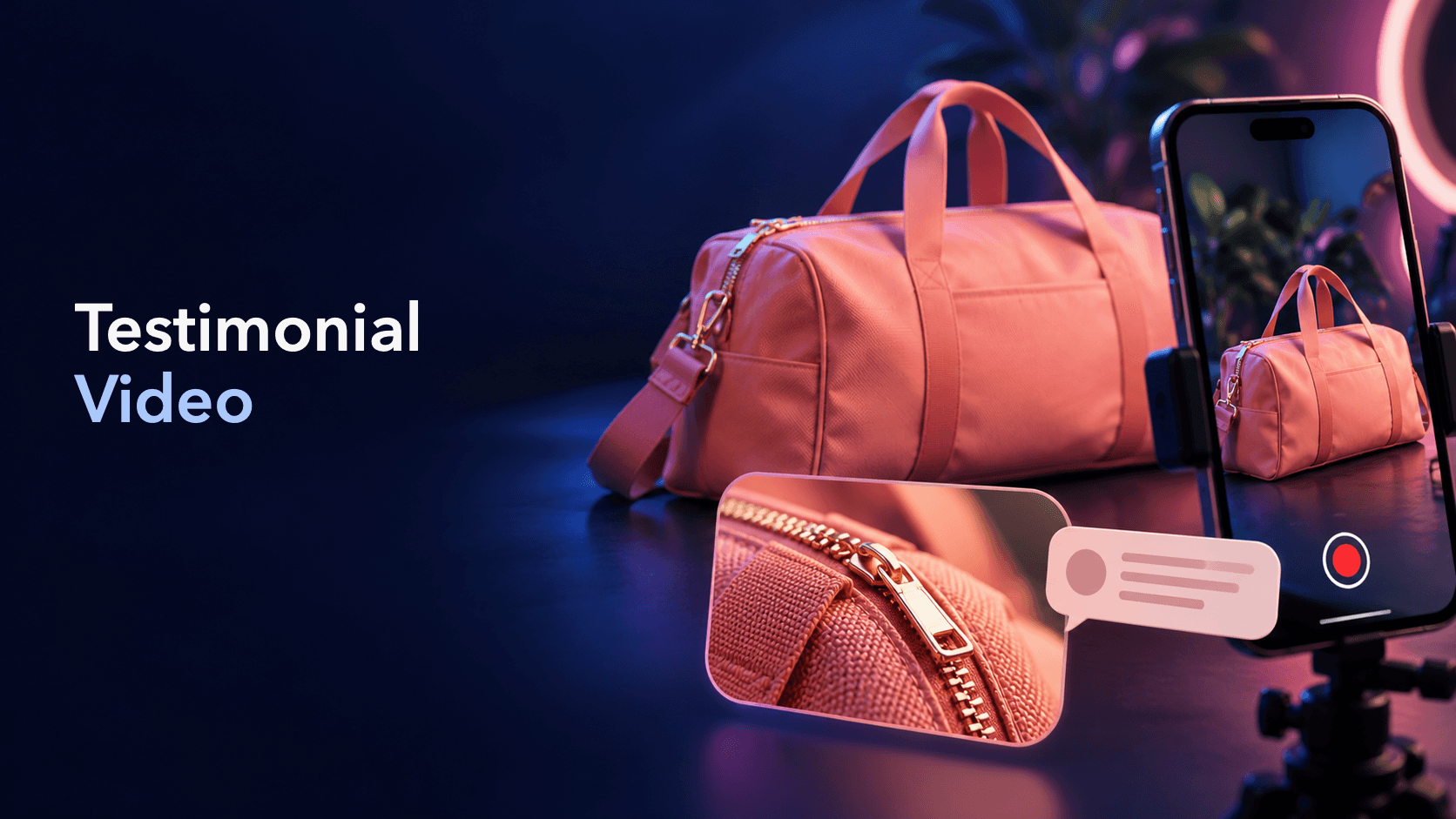
A customer testimonial video is most useful when it preserves a real experience and makes the relevant product detail easy to understand. It does not need a polished monologue, a dramatic transformation, or a promise that every buyer will get the same result.
The production challenge is turning an unstructured conversation into a clear piece of creative without putting words in the customer's mouth. Start with a real use case, ask questions that invite specifics, film enough context to support the answer, and edit for clarity while keeping the original meaning intact.
This guide covers the practical workflow: choosing a customer, preparing interview questions, filming, editing, adding captions and disclosures, and creating responsible variations. The examples are fictional and illustrative.
A customer testimonial video features a customer describing an actual experience, opinion, or observation about a product or service. The person may speak directly to camera, answer an interviewer off-screen, demonstrate the product, or appear in a short review-led edit.
It is related to—but not the same as—other forms of social creative:
The defining question is simple: does the speaker's statement represent a real experience, and can the finished edit show the conditions around it accurately?
Do not begin by inventing a perfect quote. Begin with the evidence and the production conditions.
Look for a customer who can describe one concrete situation: choosing between sizes, fitting a product into a routine, solving a setup problem, comparing options, or using a feature in a particular context. A narrow situation produces better questions than “Tell us why you love it.”
Write the working angle as a sentence:
A customer who needed [specific situation] used [product] to [observable action] and noticed [specific experience, with conditions].
Keep the final sentence grounded. “I used the pouch to separate chargers during my commute” is a source statement. “This pouch keeps everyone organized all day” is a broader claim that needs separate support.
Before filming, record who is speaking, what they agreed to, where the footage may appear, the date, and whether they received payment, a free product, a discount, or another benefit. Confirm how the relationship will be disclosed for the intended market and placement.
The FTC's guidance says endorsements should reflect the endorser's honest experience and should not make claims that would be deceptive or unsupported if the advertiser made them directly. It also says material connections should be disclosed. This is U.S. guidance, not a substitute for market-specific legal review, but it is a useful production gate. (FTC: Advertisement Endorsements)
For each statement likely to appear in the edit, note:
This prevents a common editing error: cutting away the context that made a statement accurate, then adding a caption that makes it sound universal.
Good questions are open enough to invite the customer's language but specific enough to reveal a situation, action, and observation. Send the themes in advance, but avoid requiring a memorized script.
Avoid leading questions such as “How much did this change your life?” They encourage inflated language and can make the final cut harder to substantiate. If an answer is broad, follow up with “What did that look like in practice?” or “Can you show that?”
The interview is only one layer. Capture supporting footage that lets a viewer understand what the customer is describing.
For short-form placements, plan for vertical 9:16 framing and keep important visual or text elements in the safe zone. Meta's Reels guidance also emphasizes vertical creative, audio, and key messages placed within the safe area. These are format considerations, not guarantees of performance. (Meta for Business: Reels ads)
Do not stage a product interaction the customer did not describe as real. A recreated shot can be useful if it is clearly treated as a reconstruction and does not imply a different experience.
A strong edit is selective. One video should usually answer one primary buyer question rather than compress an entire interview into a list of benefits.
For example, a customer might say, “I needed a smaller bag for train days. I use the front pocket for my charger and badge, so I do not have to unpack the main compartment.” The edit can show the commute setup, the pocket, and the action. It does not need to turn that experience into “the best bag for every commuter.”
Remove repetition, long detours, and unclear phrasing, but do not change the meaning. If a sentence is heavily compressed, compare it with the original recording and claim map. The FTC notes that an endorsement may not be presented out of context or reworded to distort the endorser's opinion or experience. (FTC Endorsement Guides)
Captions should match what is spoken. Do not use the caption layer to add a stronger promise than the customer made. If the speaker says “I use it for my commute,” do not caption it as “Works for every commute.”
Place any required relationship disclosure where viewers can notice it in the video and surrounding post or ad context. “Customer received a free product” and “Paid partnership” may have different requirements depending on the market and platform; confirm the exact wording with the appropriate reviewer.
Before approval, check:
This review matters even when the footage feels casual. “Authentic” is a production quality, not a permission to skip evidence, consent, or claims review.
Once the source is approved, create variations by changing one meaningful decision at a time:
Name the learning question for each version. For example: “Does the size objection become clearer when the first shot shows the bag beside a laptop?” Avoid making ten versions that only swap adjectives. The creative testing framework can help keep the hypothesis, variable, and interpretation separate.
Sprokl can help teams turn approved product inputs into ecommerce ad concepts, creative angles, hooks, scripts, messaging frameworks, and video variations. Generated directions are starting points; the team still needs to verify the customer source, permissions, disclosures, product facts, and final edit.
Use this as a one-page handoff:
Give the customer the topic, use case, and question themes, but let them answer naturally. A script can help with structure; it should not manufacture an experience or force a claim the customer cannot support.
There is no universal ideal length. Make the cut as short as possible while preserving the situation, relevant product detail, customer meaning, and next step. Produce a few deliberate versions when different placements require different pacing.
No. UGC usually describes a creator-led style or source. A testimonial video is defined by the role of a real person's experience or opinion. The two can overlap, but neither term automatically proves authenticity or performance.
Do not assume so. A customer's experience may be specific to their product, conditions, and use. Review whether the statement implies typical results, whether it needs substantiation, and whether the edit makes the limitation clear.
Keep the source and permission record according to your retention policy. Unused footage can inform future questions or versions, but do not recycle a quote into a different context without checking that the meaning and usage rights still apply.
A customer testimonial video earns trust through specificity: a real situation, a visible product detail, a carefully preserved experience, and a next step that lets the viewer learn more. Treat the interview as evidence, the edit as interpretation, and the review gate as part of production—not as cleanup after the creative is finished.
Keep exploring

Make the next creative move
Build, test, and iterate on ecommerce ad creatives faster with AI-powered concepts, scripts, and variations.