
Ecommerce Marketing路September 18, 2026路9 min read

50 Social Media Hooks for Video Ads

Learn a practical social media hooks workflow for planning, testing, measuring, and improving the next iteration.

By Sprokl Team
Sprokl Blog cover with a Social Media Hooks label beside a short-form video opening frame and product visual.

A social media hook for a video ad is the opening promise, question, tension, or visual action that makes a product message relevant enough to continue. For ecommerce teams, the strongest starting point is usually not a generic creator prompt. It is a real input: a product benefit, buyer pain point, objection, use case, demonstration, comparison, proof point, offer, or desired outcome.

This collection keeps the examples practical and adaptable. Replace the brackets with facts from the product and audience, pair the first line with a visible first-frame action, and make the next script beat fulfill the opening honestly. A hook is an opening decision, not a guarantee of reach, conversion, or any other performance outcome.
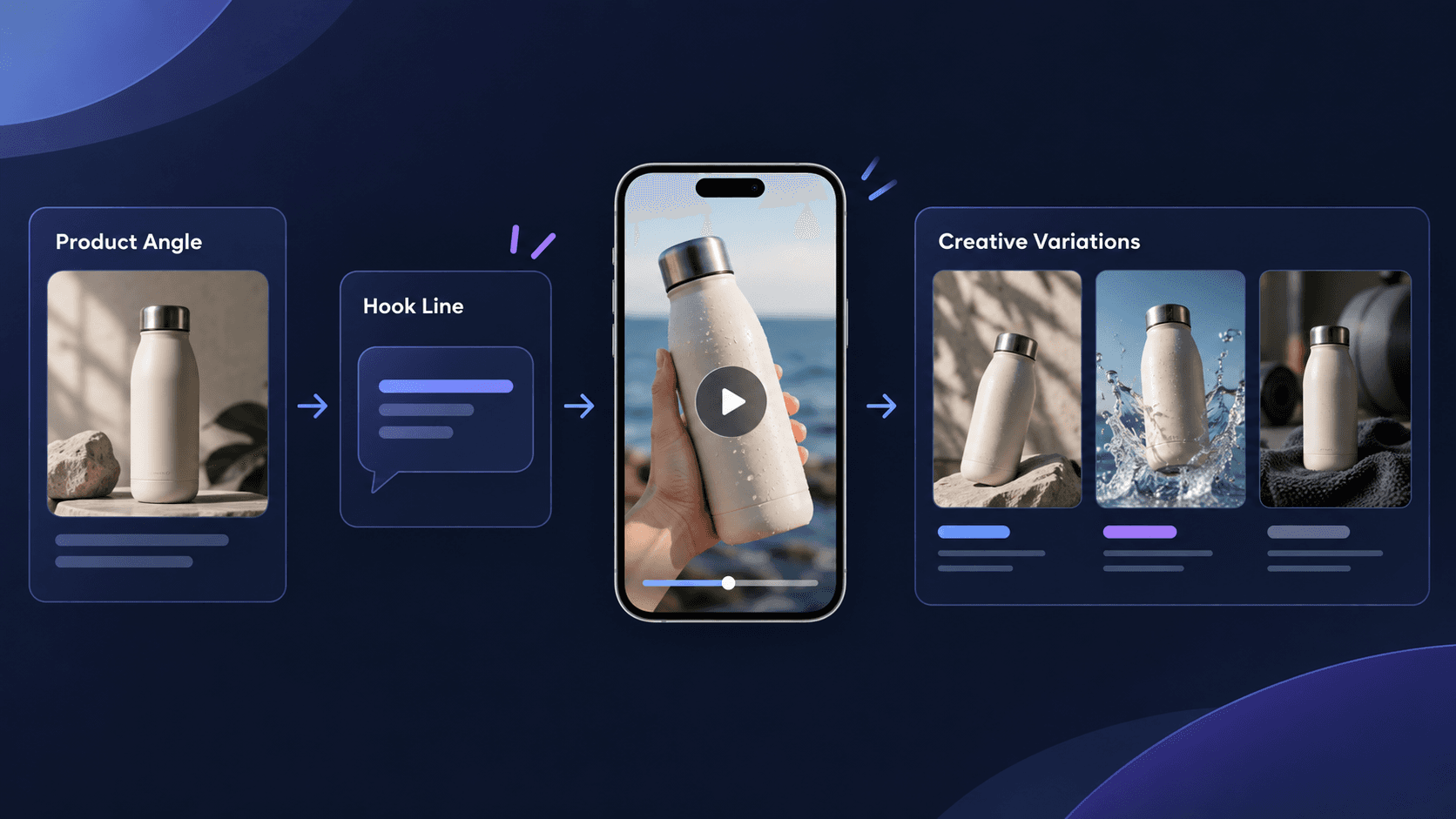
Visual overview of 50 Social Media Hooks for Video Ads (+ Ecommerce Examples).

What Makes a Social Media Hook Work for a Video Ad?

A useful opening aligns three things: the buyer situation, the product angle, and the first piece of evidence. The spoken line or on-screen text can name the problem; the first frame can show the product entering the task; the next beat can demonstrate or explain what the opening promised. Keep one clear idea in the opening so the viewer can identify why the video is relevant.
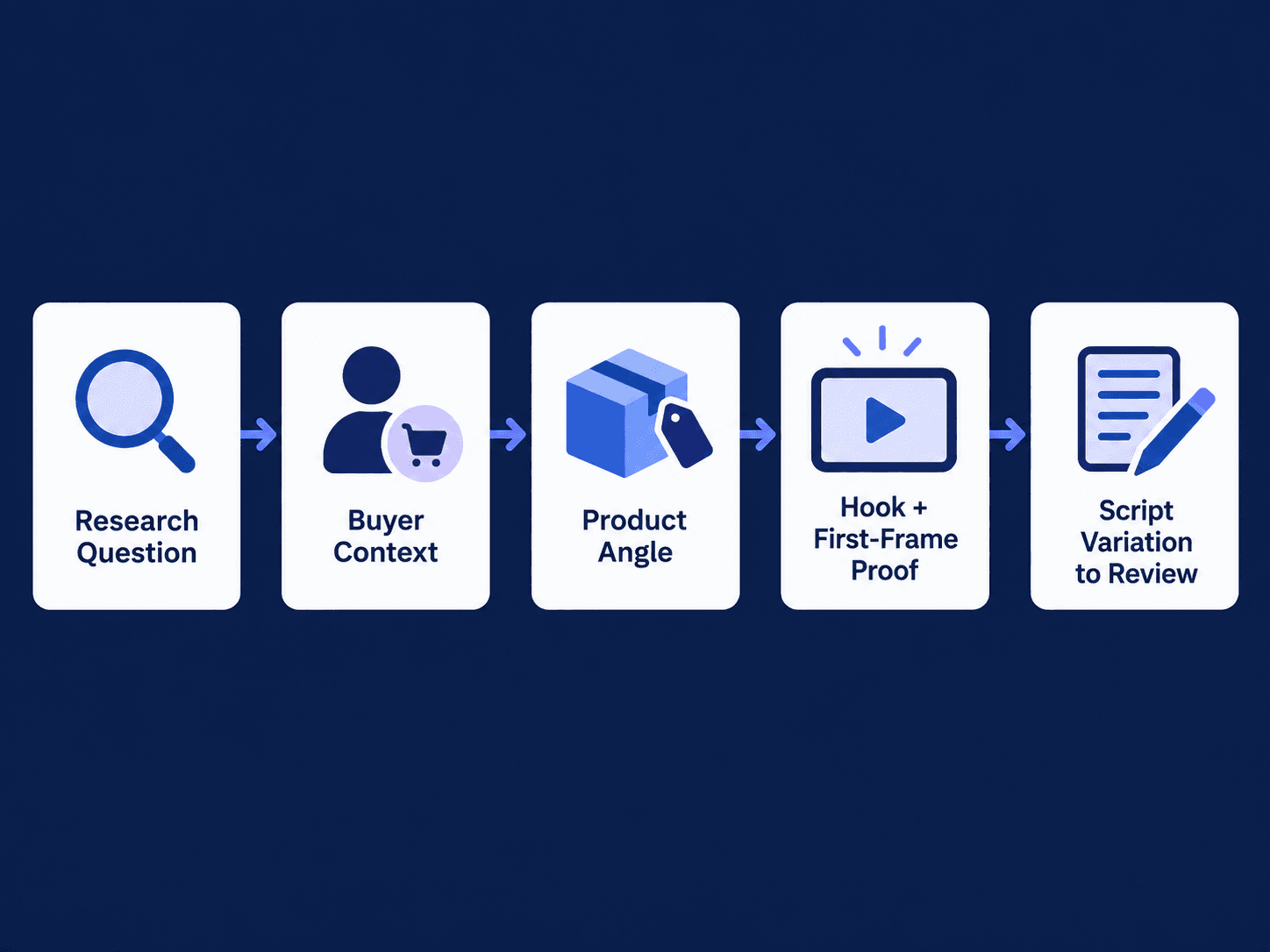
Reference Selection Framework showing research question, audience relevance, content goal, and reference video choice.

How to Turn a Product Angle Into a Video-Ad Hook

Start with one angle and complete this short brief: audience and situation; problem, benefit, objection, or desired outcome; product fact or demonstration; opening wording; first-frame visual; and the next script beat. Then create two or three meaningfully different openings while holding the central product message stable. Review brand accuracy, offer details, and claim boundaries before testing.

50 Social Media Hooks for Video Ads

Problem and Pain Point Hooks

These openings are prompts for original product-ad executions. Add the product, buyer context, and evidence rather than publishing the bracketed text unchanged.

  1. Still dealing with [buyer pain] after trying [category]? Show the product detail that changes the next step.
  2. If [pain point] keeps slowing down [use case], start with what this product does differently.
  3. Your [category] should not make [specific task] this difficult鈥攈ere is the part to check first.
  4. Before you accept [frustrating outcome] as normal, watch how this [product] handles the problem.
  5. The hardest part of [customer situation] may be the step no one explains; let us show it with [product].

Benefit and Desired Outcome Hooks

These openings are prompts for original product-ad executions. Add the product, buyer context, and evidence rather than publishing the bracketed text unchanged.

  1. Want [desired outcome] without adding another complicated step? Start with this [product] in use.
  2. Here is the small product change that makes [routine or task] easier to see and repeat.
  3. If your goal is [outcome], compare the first step with and without this [product].
  4. This [product] is designed for the moment when you need [specific benefit], not a list of vague features.
  5. Show the outcome first, then explain which product feature helps create that experience.

Product Demonstration Hooks

These openings are prompts for original product-ad executions. Add the product, buyer context, and evidence rather than publishing the bracketed text unchanged.

  1. Watch what happens when this [product] meets [specific material, surface, or situation].
  2. Instead of describing the feature, let us test it on the exact task buyers worry about.
  3. Here is the first thing to demonstrate when someone asks whether this [product] is practical.
  4. Start with the product in motion: this is how it handles [use case] before the explanation begins.
  5. One close-up answers the question better than five feature bullets鈥攍ook at [product detail].

Before/After and Transformation Hooks

These openings are prompts for original product-ad executions. Add the product, buyer context, and evidence rather than publishing the bracketed text unchanged.

  1. This is [task] before the product enters the routine鈥攁nd the same step after the change.
  2. From [messy or slow starting point] to [clear outcome]: show the product doing the middle work.
  3. The before-and-after is not the claim; the useful part is which product step creates the difference.
  4. See how [customer situation] changes when this [product] replaces the usual workaround.
  5. Start with the contrast buyers can recognize, then reveal the product process behind it.

Objection-Handling Hooks

These openings are prompts for original product-ad executions. Add the product, buyer context, and evidence rather than publishing the bracketed text unchanged.

  1. Worried about [objection]? Show the product detail that lets a buyer judge it for themselves.
  2. If [price, fit, setup, or cleanup] is the hesitation, start with the answer in the real use case.
  3. Before you decide this [product] is too [common objection], watch the setup from the buyer鈥檚 point of view.
  4. Does it work with [constraint]? Put the product into that exact situation before explaining why.
  5. The question is not whether this feature exists; it is how the product behaves when [objection scenario] happens.

Comparison and Alternative Hooks

These openings are prompts for original product-ad executions. Add the product, buyer context, and evidence rather than publishing the bracketed text unchanged.

  1. Before comparing feature lists, put this [product] beside the workaround buyers already use.
  2. What changes when [alternative] is replaced by this [product] for one ordinary task?
  3. Compare the first real use, not just the packaging: here is where the two options differ.
  4. If you are choosing between [alternative A] and [product], watch the step that affects [buyer priority].
  5. The useful comparison is [buyer situation] to [buyer situation]鈥攍et the product demonstrate the difference.

Use Case and Audience Callout Hooks

These openings are prompts for original product-ad executions. Add the product, buyer context, and evidence rather than publishing the bracketed text unchanged.

  1. For [audience] who need [use case], this is the product detail to see before you decide.
  2. If you use [product category] in a small space, start with how this version handles [constraint].
  3. Made for the moment when [audience situation] happens: watch this [product] solve the first step.
  4. For anyone managing [specific routine], here is the [product] setup that fits the actual workflow.
  5. If your day includes [use case], begin with the part of this [product] that removes the repeated friction.

Proof, Review, and Customer-Evidence Hooks

These openings are prompts for original product-ad executions. Add the product, buyer context, and evidence rather than publishing the bracketed text unchanged.

  1. Here is the customer question we answer first about this [product], using the product in the real context.
  2. Instead of a broad review, watch one buyer-relevant task from setup through result.
  3. A useful product review starts with the situation: this is what [customer type] needed to know.
  4. Show the evidence behind the product detail buyers keep asking about, then explain the limit too.
  5. This customer story begins with [specific situation], not a generic claim鈥攚atch how the product fits it.

Offer, Value, and Price-Context Hooks

These openings are prompts for original product-ad executions. Add the product, buyer context, and evidence rather than publishing the bracketed text unchanged.

  1. Before you look at the price, see which everyday task this [product] is built to simplify.
  2. What is included matters when the buyer needs [use case]; show the product and the setup together.
  3. If you are comparing value, start with the repeated problem this [product] is meant to address.
  4. Here is what the offer includes, what it does not include, and which buyer situation each part serves.
  5. Price makes more sense in context: demonstrate the product step buyers would otherwise repeat manually.

Product-Anchored Curiosity and Open-Loop Hooks

These openings are prompts for original product-ad executions. Add the product, buyer context, and evidence rather than publishing the bracketed text unchanged.

  1. There is one product detail to check before using this [category] for [use case].
  2. Why does this [product] begin with [unexpected step]? The demonstration answers it before the feature list.
  3. Most buyers inspect [obvious feature] first; this less visible product detail changes the decision.
  4. What happens when [specific condition] meets this [product]? Start the video at the moment of proof.
  5. The answer to [buyer question] is not in the headline鈥攚atch the product reveal it in use.

How to Adapt Hooks for TikTok, Reels, and Paid Social

The same product angle can be edited for different placements without becoming a virality formula. Test whether the opening is understandable with sound on and off, whether the product is visible in the first frame, whether text stays readable in the platform safe area, and whether the pace fits the placement. Keep the buyer problem and product facts consistent when comparing variations, and record which opening, visual, proof point, and CTA changed.

From Hook to Script and Creative Variations

Carry the selected opening into a simple sequence: hook, product proof, explanation, and next step. For example, a reusable storage product can begin with a specific countertop problem, show the product handling the item, explain the relevant design detail, and invite the shopper to inspect the size or configuration. From that angle, create variations by changing only the opening line, first visual, proof order, or audience callout. For the broader product video advertising workflow, keep the angle and evidence visible while treating creative testing methodology as a separate, explicit review decision. Sprokl fits as a workflow for organizing the angle, script direction, and reviewable creative variations; final claims and testing decisions still require human review.

Social Media Hook FAQs for Ecommerce Ads

UGC can describe a delivery style or research context, but this article does not target generic UGC-hook inspiration. A product ad hook should connect to a buyer and a product-specific reason to continue. There is no universal best hook, fixed winning formula, or automatic generator implied here. Evaluate the next variation against the purpose of the creative and the evidence available for that campaign.

Final Takeaway

The most useful social media hooks for video ads begin with a real product angle. Turn a benefit, pain point, objection, use case, proof point, comparison, or offer into one clear opening; pair it with visible product evidence; expand it into a script; and prepare controlled variations for review and testing. The result is a traceable creative decision rather than a generic swipe file.

Keep exploring
You might also like

Make the next creative move

Turn product ideas into ready-to-test ad creatives.

Build, test, and iterate on ecommerce ad creatives faster with AI-powered concepts, scripts, and variations.